

What is a Skillion Roof? Design, Pros, and Cons
Skillion roofs feature a single sloping plane and have become popular in Australian architecture for their modern look and practical advantages. This guide explains what defines a skillion roof, how it compares to other roof types, and where it works best in residential builds.
Call (02) 5850 0271Understanding Skillion Roof Design
A skillion roof is a single-pitched roof that slopes in one direction, creating an asymmetrical profile distinct from traditional gable or hip roofs. The design is characterised by a clean, modern aesthetic and straightforward construction that makes it a popular choice for contemporary homes, extensions, and outbuildings across Australia.
Skillion roofs typically feature a pitch ranging from 10 to 35 degrees, though steeper pitches are possible depending on the design intent and roofing material. The single plane eliminates the need for ridges or valleys, simplifying waterproofing and reducing construction complexity compared to multi-faceted roof designs.
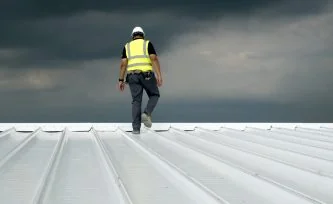
What Defines a Skillion Roof
The defining characteristic of a skillion roof is its single sloping plane that runs from one wall to another without interruption. Unlike a gable roof, which has two opposing slopes meeting at a central ridge, a skillion roof creates an asymmetrical profile with one high wall and one low wall. This design is sometimes called a shed roof or lean-to roof, though skillion is the preferred term in Australian architecture.
Pitch is an important design consideration for skillion roofs. Most residential skillion roofs fall between 10 and 35 degrees, providing adequate water runoff while maintaining a sleek profile. The pitch must be steep enough to shed water effectively for the chosen roofing material, as low-pitch designs can limit material options and require more careful waterproofing. The single-slope design also makes skillion roofs easy to distinguish from hip roofs, which have slopes on all four sides, and gable roofs, which have two symmetrical slopes.
Benefits of Skillion Roof Design
Skillion roofs offer several practical and aesthetic advantages that make them appealing for modern residential construction.
- Cost-effective construction: The simple geometry requires fewer materials and less labour compared to complex hip or gable designs, reducing overall installation costs.
- Ease of installing solar panels: The single sloping plane provides an ideal surface for mounting solar panels with consistent orientation, maximising energy generation without complicated mounting systems.
- Contemporary aesthetic: The clean lines and asymmetrical profile align with modern architectural styles, making skillion roofs a natural fit for contemporary home designs.
- Simpler waterproofing: Without ridges or valleys, there are fewer potential leak points and the single plane directs water flow in one predictable direction.
- Good for adding clerestory windows: The height difference between the high and low walls creates opportunities for high-level windows that bring natural light deep into the home.
- Lower wind resistance profile: When oriented correctly, the single slope can reduce wind uplift forces compared to multi-faceted roofs, though this depends on prevailing wind direction.
Common Materials and Construction
Colorbond steel is the most common roofing material for skillion roofs in Australia. The lightweight metal sheets suit the single-slope design and provide the clean, modern look that complements contemporary architecture. Colorbond also performs well across a wide range of pitches and requires minimal maintenance over its lifespan. Tiles are less common on skillion roofs due to the lower pitch angles often used, as most tiling systems require steeper slopes for proper water shedding and compliance with manufacturer specifications.
The structural framing for a skillion roof typically uses either traditional rafters running from the high wall to the low wall, or engineered timber trusses that span the distance and support the roofing sheets. The pitch must be steep enough for the chosen material to shed water effectively, which is why correct design is critical. For Colorbond installations, a minimum pitch of around 5 degrees is acceptable, but steeper pitches between 10 and 20 degrees are more common to ensure reliable drainage and reduce the risk of pooling during heavy rain events typical in coastal regions.
When a Skillion Roof Works Best
Skillion roofs are ideal for modern home designs, extensions, granny flats, sheds, and carports where a contemporary aesthetic is desired. The single-slope design integrates well with flat or mixed-pitch architectural styles and works particularly well for north-facing slopes in Australian climates, maximising solar gain in winter. However, skillion roofs are less suited to traditional or heritage settings where gable or hip roofs are more appropriate. The pitch must always be steep enough for the chosen roofing material to perform correctly, as low-pitch designs can lead to water pooling and premature wear if not carefully detailed.
Limitations to Consider
While skillion roofs offer many advantages, they come with some limitations. The single-slope design provides less attic or ceiling cavity space compared to a gable roof, which can limit options for insulation depth, storage, or future ceiling height adjustments. This can be a consideration in climates where high levels of ceiling insulation are desirable for thermal performance.
Retrofitting a skillion roof onto an existing home can be more challenging than other roof types, as the asymmetrical design often requires significant structural changes to accommodate the high and low wall heights. Limited insulation depth in low-pitch designs can reduce thermal performance, though this can be mitigated with high-performance insulation materials. In coastal regions like the Illawarra, skillion roofs may require additional bracing or tie-down systems to resist wind uplift, particularly if the slope faces the prevailing wind direction. These factors should be considered during the design phase to avoid issues during construction or throughout the life of the roof.
Planning a new build or extension with a skillion roof?
We install Colorbond and metal skillion roofs across the Illawarra
Frequently asked questions
The minimum pitch depends on the roofing material. For Colorbond steel, a pitch of around 5 degrees is technically acceptable, but most builders recommend at least 10 degrees for reliable water drainage and to reduce the risk of pooling during heavy rain. Tiled roofs typically require steeper pitches, often 15 degrees or more, depending on the tile type and manufacturer specifications.
A skillion roof has a single sloping plane, while a gable roof has two opposing slopes that meet at a central ridge. Skillion roofs are simpler to construct and have a modern aesthetic, whereas gable roofs provide more attic space and suit traditional architectural styles. Skillion roofs also make solar panel installation easier due to the single orientation.
Yes, insulation can be added to a skillion roof, though the available depth may be limited in low-pitch designs. Most skillion roofs use bulk insulation batts between the rafters or under the roof sheets, and foil insulation can be added for additional thermal performance. The key is to maintain adequate ventilation to prevent condensation buildup in the roof cavity.
Yes, skillion roofs are excellent for solar panel installations. The single sloping plane provides a consistent orientation, making it easy to mount panels with optimal tilt and direction for maximum energy generation. This is a significant advantage over hip roofs, which have multiple slopes facing different directions and often result in less efficient solar layouts.
Skillion roofs can perform well in high-wind areas when correctly designed and oriented. The single slope can reduce wind uplift forces when facing away from prevailing winds, but if the slope faces into the wind, additional bracing and tie-down systems may be needed. In coastal regions like the Illawarra, structural engineers typically design skillion roofs to meet higher wind load standards to resist cyclonic conditions.
Roofing services related to this guide
Related roofing guides
If you have questions about your specific roof, call us on (02) 5850 0271
Email: info@wollongonglocalroofers.com.au
Mon - Sat • 7:00am - 7:00pm
Ready to protect your roof?